
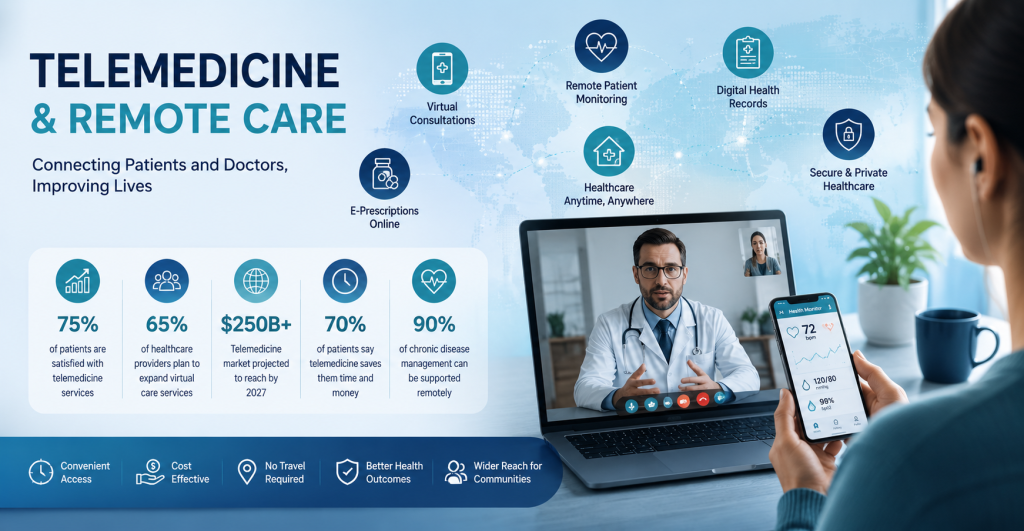

The rapid expansion of telemedicine and remote care is transforming the healthcare industry by improving access, convenience, and patient engagement. As digital health technologies continue to evolve, healthcare providers, patients, and organizations are increasingly adopting virtual consultations, remote monitoring tools, and connected healthcare platforms.
The growth of telemedicine has accelerated due to rising demand for accessible healthcare services, increasing smartphone adoption, and advancements in digital communication technologies. Remote care solutions are helping patients receive medical support without frequent hospital visits, making healthcare more flexible and efficient.
From virtual doctor appointments to wearable health monitoring devices, digital healthcare is becoming an essential part of modern medical systems. The shift toward technology-enabled care is expected to continue as healthcare providers focus on improving patient outcomes and expanding service availability.
Rising Adoption of Virtual Healthcare Services
Telemedicine has moved from being a supplementary healthcare option to a widely accepted method of medical consultation. Patients now use online platforms for routine checkups, specialist consultations, follow-up appointments, and chronic disease management.
The convenience of accessing healthcare from home has become a major factor behind adoption. Remote care helps reduce travel requirements, waiting times, and healthcare accessibility challenges, especially for individuals living in rural or underserved areas.
Healthcare providers are also benefiting from digital platforms by improving scheduling efficiency, managing patient communication, and expanding their reach beyond traditional healthcare facilities.
Telemedicine Usage Statistics and Digital Healthcare Expansion
The adoption of telemedicine has grown significantly as healthcare systems worldwide continue integrating digital solutions.
| Telemedicine Growth Indicator | Current Healthcare Trend |
|---|---|
| Virtual healthcare adoption | Increasing among patients and healthcare providers |
| Remote patient monitoring | Growing use for chronic disease management |
| Digital health platforms | Expanding across hospitals and clinics |
| Mobile healthcare applications | Rising due to smartphone accessibility |
| Online medical consultations | Becoming a preferred option for routine care |
The increasing use of digital healthcare platforms highlights a major transformation in how medical services are delivered. Patients are becoming more comfortable using technology for healthcare interactions, while providers are investing in secure and efficient digital infrastructure.
Remote Patient Monitoring Changing Healthcare Delivery
Remote patient monitoring (RPM) is one of the most important developments supporting the growth of digital healthcare. These solutions allow healthcare professionals to track patient health information outside traditional clinical environments.
Wearable devices, connected medical equipment, and health applications can collect important health data such as heart rate, blood pressure, glucose levels, and activity patterns.
This information enables doctors to monitor patients continuously and identify potential health concerns earlier. Remote monitoring is especially valuable for individuals managing long-term conditions because it supports ongoing care without requiring frequent hospital visits.
Key Statistics Highlighting Remote Care Expansion
| Remote Care Segment | Growth Trend |
|---|---|
| Chronic disease monitoring | Increased demand for continuous health tracking |
| Wearable healthcare devices | Growing consumer adoption |
| Virtual consultations | Higher acceptance after digital healthcare expansion |
| AI-supported healthcare tools | Increasing use for diagnosis and patient support |
| Digital healthcare investments | Rising interest from technology and healthcare companies |
These trends show that remote care is becoming a long-term healthcare solution rather than a temporary response to changing healthcare needs.
Artificial Intelligence Supporting Telemedicine Growth
Artificial intelligence is playing an important role in improving telemedicine services. AI-powered healthcare platforms can assist with patient communication, symptom analysis, appointment management, and medical data processing.
Virtual assistants and AI-based tools are helping healthcare organizations improve efficiency while allowing medical professionals to focus more on patient care.
AI integration is also supporting personalized healthcare by analyzing patient information and helping providers make more informed decisions. As technology continues advancing, AI is expected to become a stronger component of remote healthcare systems.
Benefits of Telemedicine and Remote Care
The expansion of telemedicine offers several advantages for patients and healthcare providers:
Improved Healthcare Accessibility
Remote care allows patients to connect with healthcare professionals regardless of location. This is especially beneficial for people living far from medical facilities.
Greater Convenience
Virtual consultations reduce travel time and allow patients to receive healthcare support from home.
Better Chronic Condition Management
Continuous monitoring tools help patients and doctors manage long-term health conditions more effectively.
Reduced Pressure on Healthcare Facilities
Digital healthcare services can reduce unnecessary hospital visits and improve resource management.
Challenges Affecting Digital Healthcare Adoption
Despite strong growth, telemedicine adoption still faces several challenges. Data security, patient privacy, technology accessibility, and digital literacy remain important concerns.
Healthcare organizations must invest in secure platforms and follow strict data protection practices to maintain patient trust. Additionally, improving internet access and technology awareness will be essential for expanding remote healthcare services globally.
Another challenge is ensuring that digital healthcare maintains the human connection between doctors and patients. Successful telemedicine models will likely combine technology with personalized medical care.
Future Outlook of Telemedicine and Remote Care
The future of healthcare is expected to become increasingly connected, digital, and patient-focused. Advances in artificial intelligence, wearable technology, cloud healthcare platforms, and remote monitoring solutions will continue shaping medical services.
Telemedicine is expected to become a key component of healthcare systems worldwide, supporting faster communication, improved monitoring, and personalized treatment approaches.
As patients continue embracing digital healthcare experiences, providers will continue developing innovative solutions to deliver better care beyond traditional healthcare settings.
Conclusion
Telemedicine and remote care are redefining the healthcare landscape by making medical services more accessible, efficient, and technology-driven. The combination of virtual consultations, remote monitoring, AI, and connected devices is creating a more flexible healthcare ecosystem.
With continued innovation and increasing digital adoption, remote healthcare is set to play a major role in the future of global healthcare delivery.