
QR codes have evolved from a niche technology into one of the most widely used digital tools worldwide. From contactless payments and restaurant menus to product packaging, event ticketing, healthcare, and marketing campaigns, QR codes are now an essential part of everyday life.
The widespread adoption of smartphones, digital payment systems, and omnichannel marketing has significantly increased QR code usage across industries. Businesses increasingly rely on QR codes to bridge offline and online experiences, while consumers appreciate the convenience of instant access to information and services.
This article highlights the latest QR code usage statistics, industry trends, consumer behavior, and market growth to help marketers, businesses, researchers, and technology enthusiasts understand where QR technology is headed.
Key QR Code Usage Statistics (Editor’s Choice)
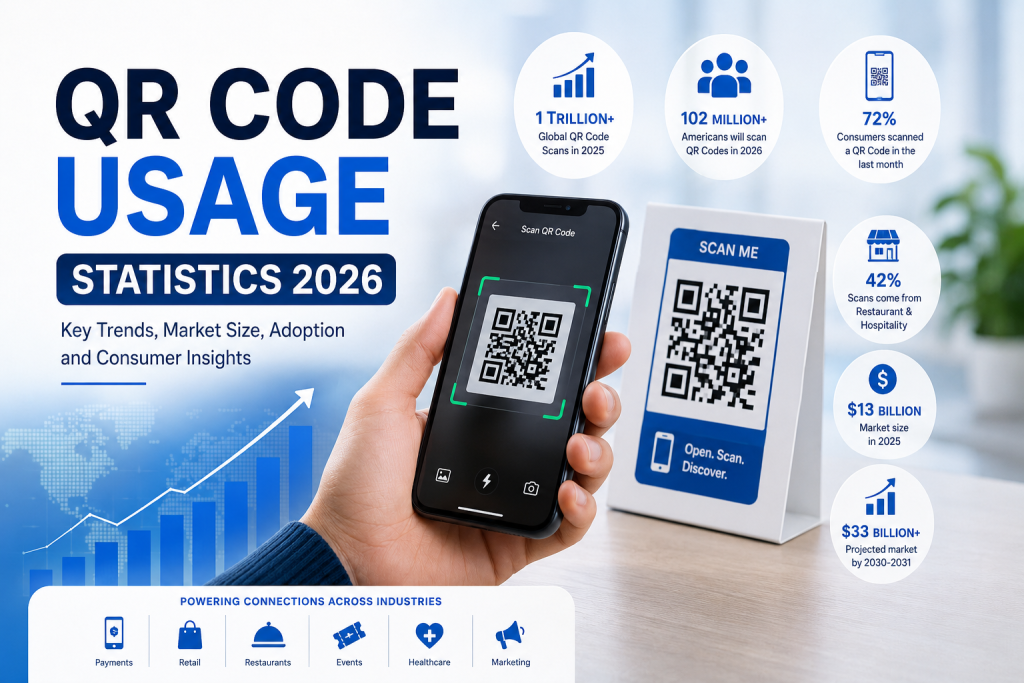
- More than 102 million Americans are expected to scan QR codes in 2026.
- Global QR code scans surpassed 1 trillion during 2025.
- Around 72% of consumers scanned at least one QR code during the past month.
- The global QR code market was valued at approximately USD 13 billion in 2025.
- The market is projected to exceed USD 33 billion by 2030–2031.
- Over 93% of brands increased their QR code usage during the past year.
- QR campaigns achieve click-through rates between 3.5% and 4.3%.
- India remains the world’s largest QR payment ecosystem through UPI.
- Restaurant and hospitality account for nearly 42% of total QR code scans.
- More than 50% of global internet users scan at least one QR code every month.
Global QR Code Adoption Statistics
QR code adoption has accelerated rapidly since the pandemic and continues expanding across both developed and emerging markets.
Some of the most notable numbers include:
| Global QR Code Adoption | Statistics |
|---|---|
| Global scans during 2025 | Over 1 trillion |
| U.S. smartphone users scanning QR codes (2026) | 102.6 million |
| Consumers scanning QR codes in the last month | 72% |
| Brands increasing QR code usage | 93% |
| Growth in QR adoption (2020–2024) | 57% |
Businesses increasingly use QR codes for:
- Digital payments
- Product information
- Loyalty programs
- Restaurant menus
- Event check-ins
- Marketing campaigns
- Healthcare records
- Supply chain management
QR Code Market Size Statistics
The QR code industry has become a multi-billion-dollar market driven by software platforms, analytics, digital payments, and retail adoption.
| QR Code Market Growth | Value |
|---|---|
| Market size (2025) | USD 13.04 Billion |
| Projected market (2030) | USD 33.14 Billion |
| Estimated CAGR | Around 20% |
The growing popularity of dynamic QR codes, mobile commerce, and digital transformation initiatives continues to fuel market expansion worldwide.
Consumer QR Code Usage Statistics
Consumer behavior has changed dramatically over the past five years.
Some interesting statistics include:
- Around 72% of consumers scanned a QR code within the past month.
- More than 70% of surveyed users scan QR codes at least monthly.
- Nearly 71% of consumers consider QR codes useful in their daily lives.
- Over 50% of global internet users regularly interact with QR codes.
- Younger consumers remain the most frequent QR code users, especially Millennials and Gen Z.
Consumers most commonly scan QR codes for:
- Mobile payments
- Restaurant menus
- Coupons
- Product details
- Event tickets
- Wi-Fi access
- App downloads
QR Code Usage by Industry
Different industries have embraced QR technology at varying rates.
Restaurant and hospitality continue leading global QR code adoption.
| Industry | Share of QR Code Usage |
|---|---|
| Restaurant & Hospitality | 42% |
| Retail & E-commerce | 28% |
| Healthcare | 15% |
| Marketing & Advertising | 8% |
| Other Industries | 7% |
Restaurants continue using QR codes for menus, ordering, payments, and customer feedback, while retailers increasingly deploy them for product information and loyalty programs.
Marketing QR Code Statistics
QR codes have become a powerful marketing channel.
Recent data shows:
- 88% of marketers report improved customer perception toward QR codes.
- 93% of brands increased QR code deployment during the past year.
- QR marketing campaigns deliver average click-through rates between 3.5% and 4.3%.
- QR codes featuring a clear call-to-action generate significantly more scans than codes without instructions.
Popular marketing applications include:
- Print advertisements
- Product packaging
- Outdoor advertising
- Business cards
- Email campaigns
- Retail promotions
QR Code Payment Statistics
Digital payments remain one of the biggest drivers of QR code adoption.
Key highlights include:
- India processed over 18.6 billion UPI QR code transactions during Q1 2026.
- QR payment adoption continues expanding across Asia-Pacific.
- Millions of merchants worldwide now accept QR-based payments.
- QR payment systems reduce transaction costs while improving checkout speed.
India has become the global leader in QR payments thanks to the rapid success of UPI.
Device Usage Statistics
Most QR scans now occur directly through smartphone cameras.
Recent platform analytics show:
- Approximately 58% of scans occur on iOS devices.
- Around 42% happen on Android smartphones.
- Nearly 90% of modern smartphones support native QR code scanning without additional apps.
Business QR Code Trends
Organizations increasingly prefer dynamic QR codes because they offer:
- Editable destinations
- Real-time analytics
- Campaign tracking
- Better customer engagement
- Higher marketing ROI
Dynamic QR adoption reportedly grew by approximately 38% between 2025 and 2026 as businesses shifted toward analytics-driven campaigns.
Future of QR Code Usage
Several emerging trends are expected to shape the future of QR technology:
- AI-powered personalized QR experiences
- Smart product packaging
- Augmented Reality integration
- Digital identity verification
- Healthcare documentation
- Supply chain transparency
- Contactless public services
- Wider retail barcode replacement initiatives
Global retailers are also preparing for broader adoption of next-generation 2D barcodes that incorporate QR technology, making QR codes even more common across shopping experiences.
Conclusion
QR codes have transformed from simple information-sharing tools into a critical component of modern digital experiences. Their widespread adoption across payments, retail, healthcare, hospitality, logistics, and marketing demonstrates their long-term value rather than a temporary trend.
With global scan volumes reaching unprecedented levels, a rapidly growing multi-billion-dollar market, and increasing consumer acceptance, QR codes are expected to remain a core technology connecting physical and digital interactions. As businesses continue investing in dynamic QR solutions, analytics, and personalized customer experiences, QR code usage will likely expand even further in the coming years.