
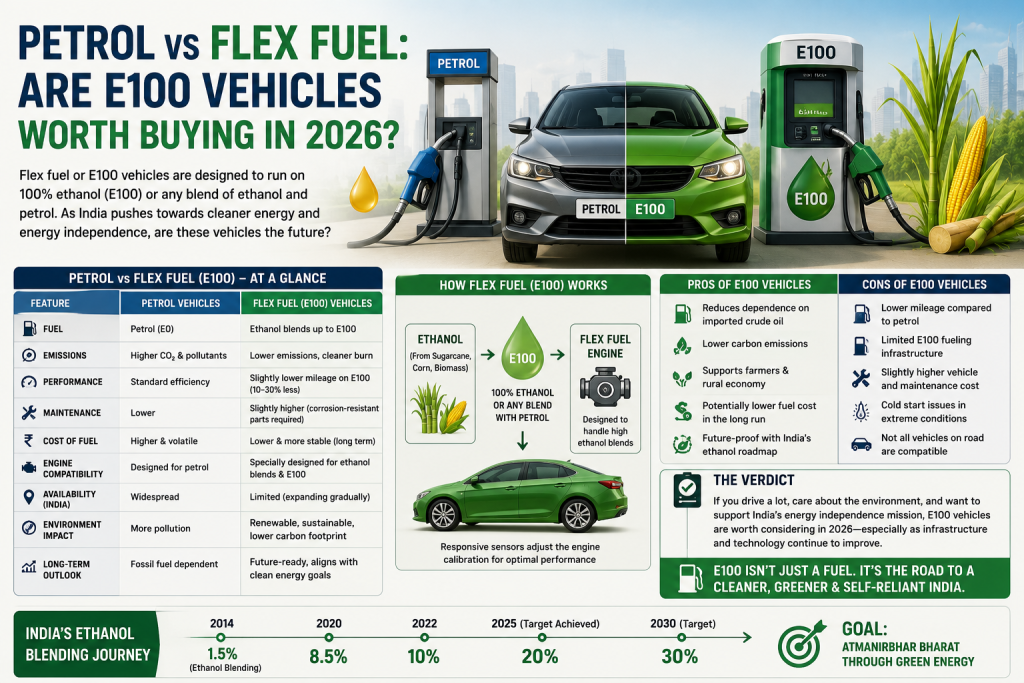

A flex-fuel vehicle (FFV) is designed to operate on 100% ethanol (E100) or any blend of ethanol and petrol. Unlike conventional petrol vehicles, flex-fuel engines use specialized components and sensors that automatically detect the fuel mixture and adjust engine timing and fuel injection accordingly.
Ethanol itself is a renewable biofuel primarily produced from sugarcane, corn, maize, and agricultural biomass, making it significantly different from fossil-based petrol.
Why India Is Promoting Ethanol
India imports a significant portion of its crude oil requirements, making fuel imports one of the country’s largest expenditures.
Increasing ethanol usage offers several strategic advantages:
- Reduces dependence on imported petroleum
- Supports Indian farmers through higher demand for sugarcane and maize
- Lowers greenhouse gas emissions
- Promotes renewable energy adoption
- Strengthens India’s energy security
The government’s ethanol blending programme has already achieved significant milestones, with further expansion planned over the coming years.
Petrol vs Flex Fuel (E100)
| Feature | Petrol Vehicle | Flex Fuel (E100) Vehicle |
|---|---|---|
| Fuel | Petrol (E0/E10) | Ethanol blends up to E100 |
| Carbon Emissions | Higher | Lower |
| Fuel Source | Fossil Fuel | Renewable Biofuel |
| Fuel Economy | Better mileage | Slightly lower mileage on E100 |
| Engine | Standard petrol engine | Modified flex-fuel engine |
| Maintenance | Conventional | Similar, with ethanol-compatible components |
| Fuel Availability | Nationwide | Still expanding |
| Environmental Impact | Higher | Cleaner alternative |
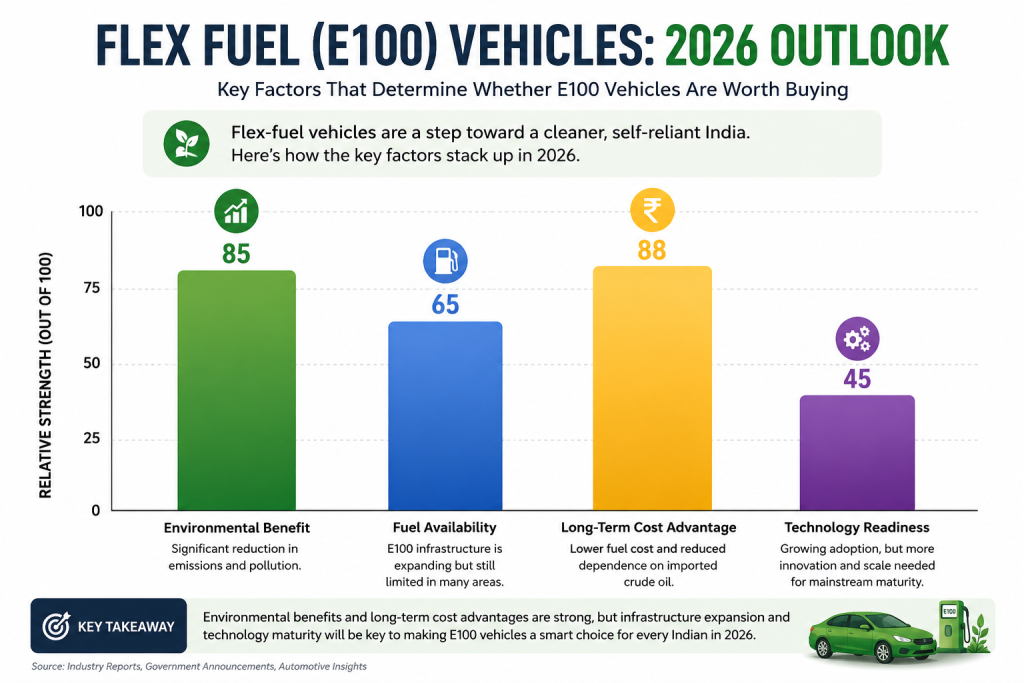
Challenges That Buyers Should Consider
Despite the advantages, flex-fuel vehicles are not without limitations.
Limited Fueling Infrastructure
The availability of E100 fuel stations remains limited compared to conventional petrol pumps, particularly outside major cities.
Lower Mileage
Since ethanol contains less energy than petrol, vehicles operating exclusively on E100 generally deliver lower fuel economy.
Initial Vehicle Cost
Flex-fuel vehicles may carry a slightly higher purchase price due to specialized engine components and fuel management systems.
Regional Availability
Infrastructure expansion is still underway, making ownership more practical in areas where ethanol fueling stations are readily accessible.
Is 2026 the Right Time to Buy?
The answer depends largely on your driving habits and location.
A flex-fuel vehicle could be a smart investment if:
✔ You live in an area with expanding ethanol infrastructure.
✔ You prioritize environmental sustainability.
✔ You drive long distances where fuel savings could offset ownership costs over time.
✔ You support India’s transition toward cleaner energy.
However, buyers in regions with limited E100 availability may find conventional petrol or hybrid vehicles more practical until the fueling network matures further.
Did You Know?
India’s ethanol blending programme has rapidly expanded over the past decade and is a key pillar of the country’s strategy to improve energy security, reduce emissions, and support domestic agriculture. As production capacity and fueling infrastructure continue to grow, flex-fuel vehicles are expected to become an increasingly important part of India’s sustainable mobility roadmap.