
Introduction
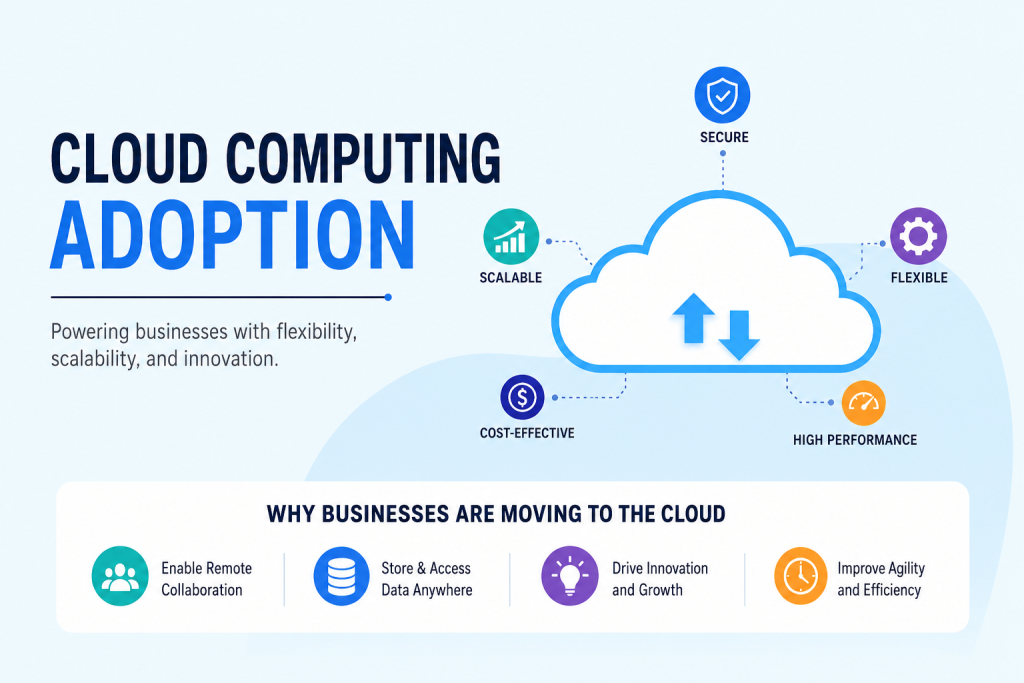
Cloud Computing Adoption has become one of the most important technology shifts as organizations worldwide move toward flexible, scalable, and digital-first business models. Companies are increasingly adopting cloud platforms to improve operational efficiency, manage growing data requirements, support remote operations, and accelerate innovation.
The transition from traditional IT infrastructure to cloud-based environments is changing how businesses manage applications, storage, and computing resources. Cloud solutions allow organizations to access advanced technologies without maintaining large physical infrastructure, making digital transformation more accessible for businesses of all sizes.
Rising Adoption of Cloud Technologies
The growing demand for digital services, automation, and real-time data access has increased cloud adoption across industries. Businesses are using cloud platforms to improve collaboration, enhance productivity, and create faster technology environments.
Cloud computing adoption is also being influenced by the increasing use of artificial intelligence, machine learning, analytics, and connected devices. These technologies require powerful computing capabilities, and cloud infrastructure provides the flexibility needed to support large-scale digital applications.
Cloud Computing Adoption Indicators
| Cloud Adoption Factor | Impact on Businesses |
|---|---|
| Digital transformation | Helps organizations modernize operations and improve efficiency |
| Remote work growth | Enables secure access to applications and data from anywhere |
| Data expansion | Supports storage and processing of increasing digital information |
| Automation demand | Provides infrastructure for AI, analytics, and intelligent applications |
| Flexible infrastructure | Allows businesses to scale resources based on requirements |
Major Drivers Behind Cloud Computing Growth
1. Increasing Business Digitalization
Organizations are investing in digital tools to improve customer engagement and streamline internal processes. Cloud platforms provide a foundation for deploying applications quickly and managing business operations more effectively.
Companies are adopting cloud-based software solutions for communication, finance, customer relationship management, and workflow automation. This shift helps businesses respond faster to changing market conditions.
2. Need for Scalable Technology Solutions
Traditional IT systems often require significant investments in hardware, maintenance, and upgrades. Cloud computing provides a more flexible approach by allowing businesses to increase or decrease computing resources according to demand.
This scalability is especially valuable for industries experiencing seasonal demand, rapid growth, or changing operational requirements.
3. Growth of Data-Driven Decision Making
Businesses are generating larger amounts of data from digital platforms, customer interactions, and connected devices. Cloud environments enable organizations to store, analyze, and use this data for better decision-making.
Advanced cloud analytics tools help companies identify patterns, improve services, and develop more personalized customer experiences.
Cloud Adoption Across Key Industries
Cloud computing is expanding across multiple sectors as organizations seek improved performance and innovation.
Healthcare Sector
Healthcare providers are using cloud platforms for data management, digital healthcare services, and improved information accessibility. Cloud solutions support better coordination among healthcare teams and enable secure management of critical information.
Financial Services
Banks and financial organizations are adopting cloud technologies to improve digital services, strengthen security systems, and support faster transactions. Cloud-based solutions help financial institutions develop innovative customer experiences.
Manufacturing Industry
Manufacturers are using cloud computing to connect production systems, monitor operations, and support smart manufacturing processes. Cloud platforms help improve efficiency through real-time data analysis and automation.
Retail Businesses
Retail companies are adopting cloud solutions to manage online platforms, improve inventory systems, and deliver personalized shopping experiences. Cloud infrastructure supports flexible operations and faster service delivery.
Cloud Computing Adoption Trends by Business Need
| Business Requirement | Cloud Computing Role |
|---|---|
| Data management | Provides scalable storage and processing capabilities |
| Remote collaboration | Supports digital teamwork and communication |
| Business continuity | Enables reliable backup and recovery solutions |
| Innovation | Helps organizations develop new digital services |
| Security improvement | Supports advanced protection and monitoring systems |
Emerging Trends Supporting Cloud Expansion
Hybrid and Multi-Cloud Adoption
Many organizations are combining different cloud environments to improve flexibility and control. Hybrid cloud models allow businesses to balance private systems with public cloud services based on operational needs.
Artificial Intelligence Integration
Cloud platforms are increasingly supporting AI-based applications. Businesses are using cloud-powered AI tools for automation, forecasting, customer insights, and operational improvements.
Edge Computing Development
Edge computing works alongside cloud technology by processing information closer to where data is created. This helps improve response times for applications such as smart devices, industrial systems, and connected technologies.
Focus on Cloud Security
As more organizations move critical operations to cloud environments, cybersecurity has become a major priority. Businesses are adopting advanced security solutions to protect data, applications, and digital assets.
Future Outlook
Cloud Computing Adoption is expected to continue influencing business strategies as organizations focus on agility, innovation, and digital growth. The combination of cloud infrastructure with emerging technologies such as AI, automation, and analytics will create new opportunities across industries.
Businesses that successfully integrate cloud solutions can improve operational efficiency, respond faster to customer needs, and build stronger digital capabilities. Cloud computing will remain a key technology foundation supporting the next phase of digital transformation.
Conclusion
Cloud Computing Adoption is transforming the way organizations operate by providing flexible infrastructure, improved accessibility, and advanced digital capabilities. From supporting remote work to enabling data-driven innovation, cloud technologies are becoming essential for modern businesses. As industries continue embracing digital solutions, cloud computing will play a central role in shaping future growth and technological advancement.