
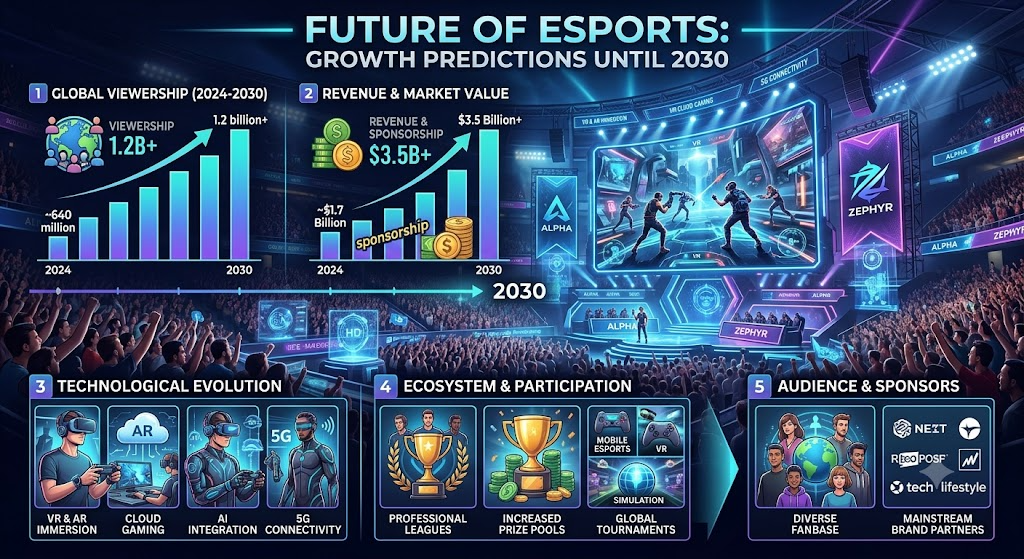

The esports industry has evolved from a niche hobby into one of the fastest-growing sectors in global entertainment. What was once limited to local gaming competitions has transformed into international tournaments watched by millions of fans worldwide. Today, professional esports players compete for multi-million-dollar prize pools, while global brands invest heavily in sponsorships, media rights, and digital content. As technology continues to advance and gaming becomes more accessible, the future of esports looks brighter than ever. By 2030, esports is expected to become a mainstream entertainment industry that rivals traditional sports in audience engagement, commercial value, and global influence.
Esports Is Entering a New Era
The rapid expansion of high-speed internet, cloud gaming, smartphones, and live streaming platforms has fueled esports’ remarkable growth. Games such as multiplayer battle arenas, first-person shooters, battle royale titles, and sports simulations have created thriving competitive communities.
Unlike traditional sports, esports allows fans from every corner of the world to watch tournaments instantly through digital platforms. This accessibility has helped build a global audience that continues to grow every year.
Professional gaming organizations are also becoming more structured, hiring coaches, analysts, fitness trainers, psychologists, and content creators to support player performance and brand development.
Key Esports Growth Statistics
| Metric | 2026 Estimate | 2030 Projection |
|---|---|---|
| Global Esports Audience | 650+ Million | 850–900+ Million |
| Industry Value | USD 2.5–3 Billion | USD 6–7.5 Billion |
| Annual Prize Pools | USD 300+ Million | USD 600+ Million |
| Major Tournament Host Countries | 40+ | 70+ |
| Mobile Esports Share | ~40% | 55–60% |
Mobile Gaming Will Drive Future Growth
One of the biggest contributors to esports growth will be mobile gaming. Improvements in smartphone technology and affordable internet access are making competitive gaming available to millions of new players.
Countries such as India, Brazil, Indonesia, Vietnam, and several Middle Eastern nations are witnessing rapid growth in mobile esports communities. As 5G networks become more widespread, mobile esports tournaments are expected to become even larger and more competitive.
Developers are investing heavily in mobile-first competitive games, ensuring that this segment remains one of the industry’s fastest-growing areas through 2030.
Artificial Intelligence Will Transform Competitive Gaming
Artificial Intelligence (AI) is set to revolutionize esports over the coming years.
AI will support players and organizations by providing:
- Real-time performance analysis
- Advanced coaching insights
- Match prediction tools
- Automated highlight generation
- Smarter anti-cheat systems
- Personalized fan experiences
Broadcasters will also use AI to improve live coverage by generating instant statistics, multilingual commentary, and interactive match analysis.
Business Investment Will Continue to Rise
Global companies increasingly view esports as an effective way to reach younger digital audiences. Technology firms, automotive manufacturers, financial institutions, telecommunications providers, and consumer brands are investing heavily in tournaments, professional teams, and gaming events.
These investments create opportunities across multiple industries, including:
- Advertising
- Media production
- Merchandise
- Event management
- Tourism
- Digital marketing
- Content creation
As sponsorship models mature, esports organizations are expected to diversify revenue through subscriptions, memberships, exclusive content, and licensing agreements.
International Events Will Become Larger
Global tournaments such as the Esports World Cup demonstrate how esports has become a worldwide entertainment spectacle. These competitions attract thousands of international visitors while generating millions of online viewers.
Host cities benefit from increased tourism, hotel bookings, restaurant sales, transportation services, and retail spending. Governments are beginning to recognize esports events as valuable economic opportunities capable of attracting international investment and showcasing technological innovation.
Streaming and Content Creation Will Expand
Streaming remains one of esports’ greatest strengths. Fans no longer simply watch tournaments—they interact with creators, participate in live chats, purchase digital merchandise, and support their favorite teams through memberships and subscriptions.
The creator economy surrounding esports will continue growing through:
- Live streaming
- Podcasts
- Tournament analysis
- Educational gaming content
- Short-form videos
- Behind-the-scenes documentaries
This growing ecosystem creates career opportunities for influencers, commentators, editors, designers, and production teams.
Education and Career Opportunities
Esports is creating employment far beyond professional gaming. Universities and educational institutions now offer specialized courses covering esports management, broadcasting, coaching, marketing, and game development.
Career opportunities include:
- Esports management
- Event production
- Broadcasting
- Marketing
- Data analytics
- Game development
- Graphic design
- Sports psychology
- Cybersecurity
- Content creation
As the industry matures, demand for skilled professionals will continue increasing across multiple disciplines.
Challenges Ahead
Despite its strong outlook, esports still faces several challenges. Many organizations continue searching for sustainable business models beyond sponsorship revenue. Player health, burnout, tournament scheduling, and competitive integrity also require ongoing attention.
However, improvements in governance, technology, and revenue diversification are helping address these issues. As the industry becomes more professional, these challenges are expected to become increasingly manageable.
The Road to 2030
By 2030, esports is expected to become one of the world’s leading entertainment industries. Advances in artificial intelligence, cloud gaming, virtual reality, and high-speed internet will make competitions more immersive than ever before. Global audiences will continue expanding, businesses will increase investments, and professional opportunities will multiply across technology, media, education, and entertainment.
Rather than replacing traditional sports, esports will continue to grow alongside them, offering a unique blend of competition, innovation, and digital engagement. For players, businesses, investors, and fans alike, the future of esports promises exciting opportunities and long-term growth.