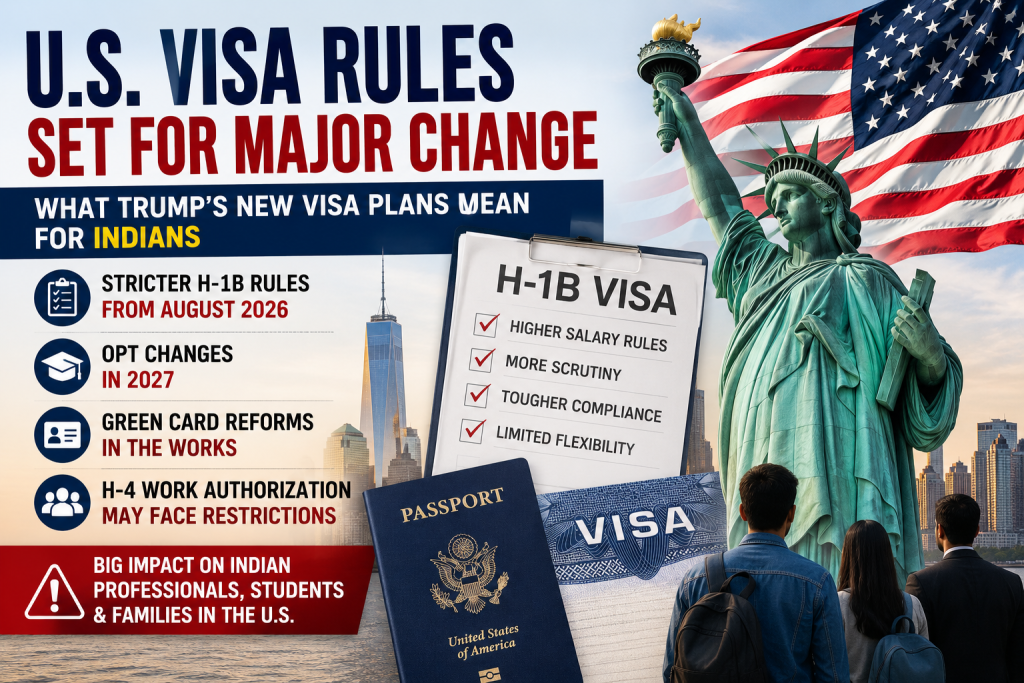

The United States is preparing one of its most significant immigration policy overhauls in recent years, with proposed changes that could reshape opportunities for Indian professionals, international students, and families living in the country. The Trump administration is expected to introduce stricter regulations covering H-1B visas, Optional Practical Training (OPT), employment-based green cards, and H-4 work authorization, with some proposals expected to begin rolling out as early as August 2026 if finalized.
For India, these developments are particularly important. Indian nationals account for the overwhelming majority of H-1B visa approvals and form one of the largest groups of international students in the United States. Any tightening of immigration policies could therefore have a direct impact on thousands of skilled professionals, graduates, technology companies, and families planning long-term careers in America.
Why These Proposed Visa Changes Matter for Indian Professionals
The H-1B visa has long served as the primary pathway for highly skilled foreign professionals working in sectors such as information technology, engineering, healthcare, finance, and research.
Every year, the U.S. issues 85,000 new H-1B visas, including 65,000 under the regular cap and 20,000 reserved for applicants holding advanced degrees from U.S. universities. Indian professionals consistently receive the largest share of these visas, particularly in the technology sector.
The proposed reforms aim to make the program more restrictive by introducing tighter eligibility requirements, higher wage expectations, increased employer scrutiny, and additional compliance measures. Supporters argue these changes would prioritize higher-skilled positions and reduce misuse of the program, while critics warn they could make hiring international talent more difficult.
Proposed H-1B Reforms Could Increase Employer Compliance
One of the key proposals reportedly under consideration involves narrowing eligibility criteria for specialty occupations while increasing oversight of sponsoring employers.
Companies may be required to demonstrate more clearly that hiring a foreign worker is justified and that compensation reflects prevailing wage standards. Increased documentation, compliance audits, and stricter enforcement could also become part of the revised process.
For employers, these measures could lengthen hiring timelines and increase administrative costs. For applicants, stronger documentation requirements may result in additional scrutiny during petition reviews. At this stage, these measures remain proposals and have not yet taken effect.
OPT Program Could See Major Changes Beginning in 2027
International students may also be affected by proposed revisions to the Optional Practical Training (OPT) program, which allows eligible graduates to work temporarily in the United States after completing their studies.
The administration is reportedly considering changes that could alter eligibility rules, program duration, or employer requirements beginning in 2027. Although final details have not been announced, universities and immigration experts believe any modifications could significantly influence career planning for international students pursuing STEM and non-STEM degrees alike.
According to the Open Doors international education report, India has become the largest source of international students in the United States, with more than 330,000 Indian students enrolled in U.S. higher education institutions during the 2023–24 academic year. A large proportion of these students rely on OPT as their first opportunity to gain professional experience after graduation.
Green Card Backlogs Continue to Challenge Indian Applicants
Beyond temporary work visas, employment-based green cards remain a significant concern for Indian professionals.
Because of annual numerical limits and country-specific quotas, many Indian applicants face exceptionally long waiting periods before receiving permanent residency. Industry studies and immigration analysts have estimated that, in some employment categories, waiting times can extend for decades due to overwhelming demand.
The proposed policy changes may introduce additional procedural requirements or adjustments to employment-based immigration processing, although specific details are still under development. Immigration experts recommend that applicants avoid making major decisions until official regulations are published.
H-4 Visa Holders Could Face Additional Uncertainty
The proposed immigration package could also affect H-4 visa holders, many of whom are spouses of H-1B professionals.
Reports indicate that automatic extensions of Employment Authorization Documents (EADs) may be reconsidered, potentially creating employment disruptions for eligible spouses while renewal applications are processed.
For families already navigating lengthy immigration procedures, any interruption in work authorization could have financial and professional consequences, particularly for dual-income households.
What Should Indian Students and Professionals Do Now?
Although the proposed reforms have generated widespread discussion, it is important to remember that these are proposed regulatory changes, not immediately enforceable rules.
Applicants should continue following existing immigration procedures while closely monitoring announcements from the U.S. Department of Homeland Security (DHS), U.S. Citizenship and Immigration Services (USCIS), and the Department of Labor. Employers, universities, and immigration attorneys are also expected to issue updated guidance as additional details become available.
Individuals planning to begin graduate education, apply for H-1B sponsorship, or pursue permanent residency should consider consulting qualified immigration professionals before making significant career or educational decisions.
Looking Ahead
The proposed immigration reforms represent a potentially significant shift in U.S. employment-based immigration policy. If implemented, they could reshape how international talent enters, studies, works, and settles in the United States.
For India—which supplies a substantial share of skilled professionals, technology workers, and international students to the U.S.—the outcome of these proposals could influence career planning, higher education, and global workforce mobility for years to come.
Until final regulations are officially released, prospective applicants should rely on verified government announcements rather than speculation. Staying informed and preparing documentation early will be the best strategy for navigating any future changes in U.S. immigration policy.