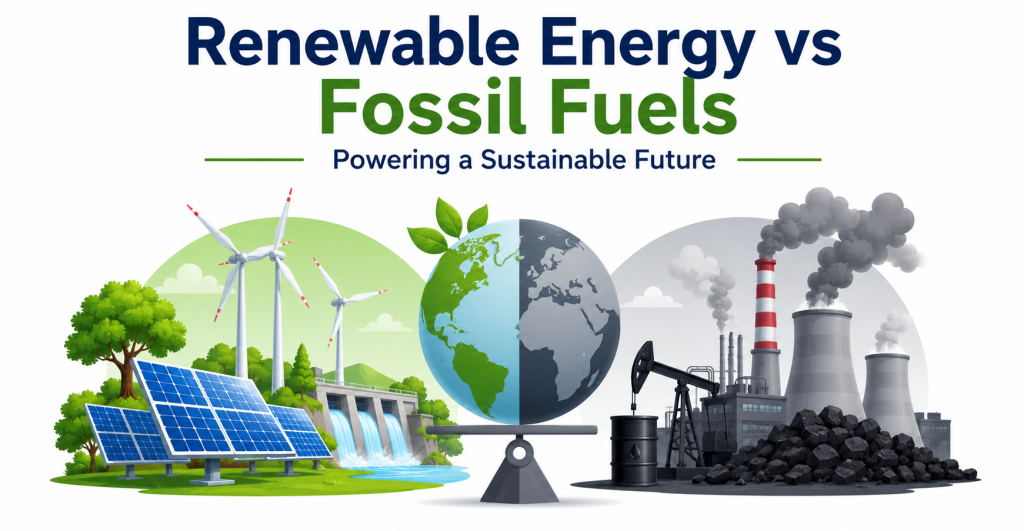

The global energy industry is undergoing one of the biggest transformations in history. Governments, businesses, and consumers are rapidly shifting toward renewable energy sources such as solar, wind, hydropower, and geothermal energy. While fossil fuels—including coal, oil, and natural gas—continue to supply a significant portion of the world’s energy, renewable technologies are expanding at an unprecedented pace. Growing concerns about climate change, rising energy demand, technological innovation, and government policies are accelerating investments in clean energy worldwide. Analysts expect renewable energy to dominate new electricity generation capacity over the coming decades.
Renewable Energy Growth Outlook (2030 Forecast)
| Metric | Value |
| Renewable share of global electricity | 46% |
| Wind + Solar share | 30% |
| Growth in renewable electricity generation | Nearly 90% (2023–2030) |
| Renewable share of final energy consumption | Nearly 20% |
Key Highlights
- Renewable energy continues to be the fastest-growing source of new electricity generation.
- Solar power remains the fastest-expanding renewable technology worldwide.
- Global investment in clean energy has reached record-breaking levels.
- Many countries have announced long-term net-zero carbon targets.
- Fossil fuels still play a major role in transportation, manufacturing, and electricity production but are gradually losing market share in new power capacity.
Renewable Energy vs Fossil Fuels Comparison
| Category | Renewable Energy | Fossil Fuels |
| Energy Source | Sun, Wind, Water, Biomass, Geothermal | Coal, Oil, Natural Gas |
| Carbon Emissions | Very Low | High |
| Fuel Cost | Free Natural Resources | Continuous Fuel Purchase Required |
| Environmental Impact | Low | High |
| Sustainability | Renewable | Finite Resource |
| Maintenance Cost | Low to Moderate | Moderate to High |
| Climate Impact | Supports Carbon Reduction | Major Source of Greenhouse Gas Emissions |
Why Renewable Energy Is Growing Rapidly
Renewable energy is experiencing unprecedented growth worldwide due to a combination of technological advancements, economic benefits, and supportive government policies. One of the biggest drivers is the significant decline in solar panel manufacturing costs, making solar power more affordable for both residential and commercial users. At the same time, improvements in battery storage technology have enhanced the reliability of renewable energy by allowing excess electricity to be stored and used when needed. Governments across the globe are further accelerating adoption through financial incentives, tax credits, subsidies, and renewable energy targets. In addition, many multinational corporations have committed to sustainability goals by investing in clean energy to reduce their carbon footprint. Rising global electricity demand, driven by population growth and digital transformation, has also increased the need for scalable energy solutions. Furthermore, ambitious net-zero emission targets announced by numerous countries are encouraging long-term investments in renewable energy infrastructure. Together, these factors have made renewable energy more accessible, cost-effective, and attractive than ever before.
Global Electricity Generation Market Share (2024)
| Energy Source | Global Share (%) |
| Coal | 35% |
| Natural Gas | 22% |
| Renewables (Total) | 33% |
| Nuclear | 9% |
| Oil | 2% |
Challenges Facing Fossil Fuels
Although fossil fuels continue to play a crucial role in powering industries, transportation, and electricity generation, they face growing environmental, economic, and regulatory challenges. The combustion of coal, oil, and natural gas is a major source of carbon dioxide and other greenhouse gas emissions, contributing significantly to global climate change. Fossil fuel use also leads to air pollution, which negatively impacts public health and ecosystems. In addition, global oil and gas prices are often subject to market volatility caused by geopolitical conflicts, supply chain disruptions, and changing demand. Energy security has become another major concern, as many countries rely heavily on imported fossil fuels. Governments are responding by implementing stricter environmental regulations, carbon pricing mechanisms, and emissions standards, increasing the operational costs of fossil fuel industries. As concerns about sustainability continue to grow, fossil fuels are facing increasing pressure to transition toward cleaner and more environmentally responsible energy alternatives.
Benefits of Renewable Energy
Renewable energy provides a wide range of long-term environmental, economic, and social benefits. By generating electricity from natural resources such as sunlight, wind, water, and geothermal heat, renewable energy significantly reduces greenhouse gas emissions and helps combat climate change. It also improves air quality by minimizing pollutants that contribute to respiratory diseases and environmental degradation. Renewable energy strengthens energy independence by reducing reliance on imported fossil fuels and improving national energy security. Although the initial installation costs may be substantial, renewable energy systems generally have lower operating and maintenance expenses over their lifetime. The clean energy sector is also creating millions of new jobs worldwide in manufacturing, installation, maintenance, research, and engineering. Furthermore, renewable energy supports sustainable economic development while ensuring a reliable and environmentally friendly electricity supply for future generations.
Renewable Electricity Market Share Breakdown (2024)
| Renewable Source | Share of Global Electricity |
| Hydropower | 14% |
| Wind | 8% |
| Solar PV | 7% |
| Bioenergy & Waste | 3% |
| Other Renewables (Geothermal, Marine, etc.) | 1% |
Industries Driving the Clean Energy Transition
The global transition toward clean energy is being accelerated by several rapidly growing industries that continue to attract substantial public and private investment. Solar energy remains one of the fastest-growing sectors due to declining equipment costs and increasing efficiency, while wind energy continues to expand both onshore and offshore. Battery manufacturing has become essential for storing renewable electricity and supporting electric mobility. The rapid adoption of electric vehicles is further increasing demand for renewable power and advanced charging infrastructure. Smart grid technology is modernizing electricity networks by improving efficiency, reliability, and the integration of renewable energy sources. Green hydrogen is emerging as a promising solution for decarbonizing heavy industries and long-distance transportation where direct electrification is difficult. Meanwhile, energy storage systems are becoming increasingly important for balancing electricity supply and demand, ensuring stable and reliable power generation as renewable energy continues to expand worldwide.