
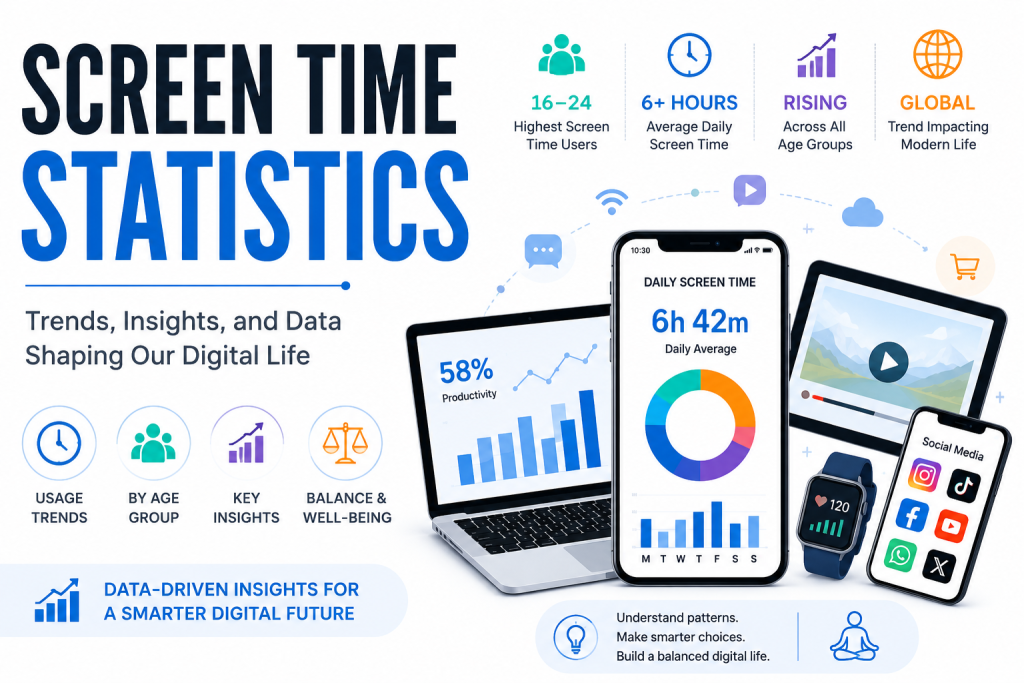

The first thing many of us reach for in the morning is no longer a cup of coffee it’s our smartphone. We check messages, scroll through social media, join meetings, watch videos, and shop online before the day even begins. Screens have become such a normal part of life that it’s hard to imagine a day without them.
Over the last decade, screen time has grown across every age group. Smartphones, laptops, tablets, smart TVs, and wearable devices now shape how people work, learn, relax, and connect with others. For businesses, educators, parents, and healthcare professionals, understanding screen time statistics is no longer optional. It helps explain how digital habits are changing and what those changes mean for everyday life. The growing role of screens shows that technology is not just a tool anymore it is part of our routine, our work, and even our identity.
Why Screen Time Keeps Rising
A decade ago, most internet use happened on desktop computers. Today, people carry powerful devices in their pockets and use them for nearly everything. From ordering food and booking travel to attending meetings and managing money, screens are now part of almost every daily task.
Remote work and online learning have also played a major role in increasing screen use. Employees now spend more time on laptops, video calls, emails, and collaboration tools, while students depend on digital classrooms, assignments, and learning apps. Even leisure has shifted online, with streaming, gaming, reading, and shopping all moving to digital platforms.
Screen Time at a Glance
The rise in screen time can be better understood when viewed across major activity categories. The table below shows how daily screen use is typically distributed in modern digital life.
These percentages vary by age group, profession, and region, but they clearly show that screen time is spread across both work and personal life.
Who Spends the Most Time Online
Screen time is rising in every generation, but younger users remain the most active. Teenagers and young adults spend a large share of their day on smartphones for social media, messaging, gaming, and short videos. For many of them, digital platforms are not just entertainment they are the main way they communicate and stay connected.
Working professionals are another group with heavy screen use. Their day often includes meetings, spreadsheets, presentations, emails, and project management tools, followed by more screen time at home for shopping, streaming, or social media. Older adults are also becoming more digitally engaged through video calls, banking, healthcare apps, and online entertainment.
Screen Time by Age Group
Different age groups use screens in different ways. The following table highlights the broad pattern of how screen habits are changing across generations.
This broad adoption shows that screen time is no longer driven by one generation it has become a universal lifestyle trend.
The Benefits of Screen Time
Not all screen time is harmful. In fact, when used well, it can make life easier, faster, and more connected. Online learning has made education more accessible, allowing people to build new skills from anywhere. Remote work has given employees more flexibility and opened up new opportunities for businesses.
Healthcare has also benefited. Telemedicine makes it easier for patients to consult doctors without traveling, while wearable devices and health apps help people track fitness and monitor conditions. Streaming platforms, digital creators, and online communities have made entertainment and communication more personalized and global than ever before.
The Downsides of Too Much Screen Time
The problem is not screens themselves it is overuse. Long hours in front of devices can lead to eye strain, poor posture, reduced physical activity, sleep disruption, and less face-to-face interaction. Many people also experience digital fatigue after spending the whole day moving between emails, chats, meetings, and apps.
Children and teenagers need special attention because their screen use often mixes learning and entertainment. Parents and educators are paying closer attention to balance, limits, and healthy digital habits. Businesses are also reacting by encouraging breaks, flexible routines, and digital wellness programs to support employee well-being.
How Businesses Use Screen Time Data
Screen time statistics are valuable far beyond personal wellness. Technology companies use them to improve user experience, advertisers use them to understand attention patterns, and streaming platforms rely on them to personalize recommendations. App developers also study engagement to improve retention and design better products.
For marketers and brands, this data offers a clear window into consumer behavior. It shows when people are online, which devices they use most, and what types of content hold attention. That makes screen time one of the most useful signals in today’s digital economy.
Different Activities, Different Habits
Not all screen time looks the same. Some people spend most of it working, while others use it for social media, gaming, shopping, or streaming. These patterns vary by age, job, and lifestyle, but together they show how deeply screens are woven into both professional and personal life.
A simple way to think about it is this: a screen can be a workplace, a classroom, a cinema, a store, or a social space depending on the moment. That flexibility is exactly why screen time keeps growing. As AI-powered tools, smart assistants, and connected devices become more common, the way people interact with screens will keep evolving.
Finding a Healthier Balance
The goal should not be to quit screens completely. Instead, the focus should be on healthier use. Small habits such as taking regular breaks, reducing screen exposure before bedtime, spending time outdoors, and staying physically active can make a real difference.
Many smartphones already offer screen-time tracking tools that help users monitor app usage and set limits. These tools are useful reminders that digital life should support well-being, not overwhelm it. For families, workplaces, and schools, balance is becoming just as important as access.
The Future of Screen Time
Screen time is unlikely to decline. In fact, it will probably keep rising as technology becomes even more embedded in daily life. Artificial intelligence, augmented reality, virtual reality, wearable devices, and smart homes will change not just how long people spend online, but how they interact with digital content.
The future is not simply about more screen hours. It is about smarter, more connected, and more immersive digital experiences. Businesses are already preparing for that shift by investing in AI personalization, cross-device experiences, and interactive content that fits naturally into modern life.
Final Thoughts
Screen time has become one of the clearest signs of how modern life has changed. From the moment we wake up to the moment we wind down at night, screens influence how we work, learn, communicate, shop, and relax. They have created convenience, opportunity, and connection but also new challenges around balance and well-being.
The real question is not whether screen time is good or bad. It is how we use it. When digital tools are used intentionally, they can improve productivity, learning, and daily life. When used without limits, they can drain energy and attention. The smartest approach is balance, because in today’s world, screens are not going away they are becoming more central than ever.