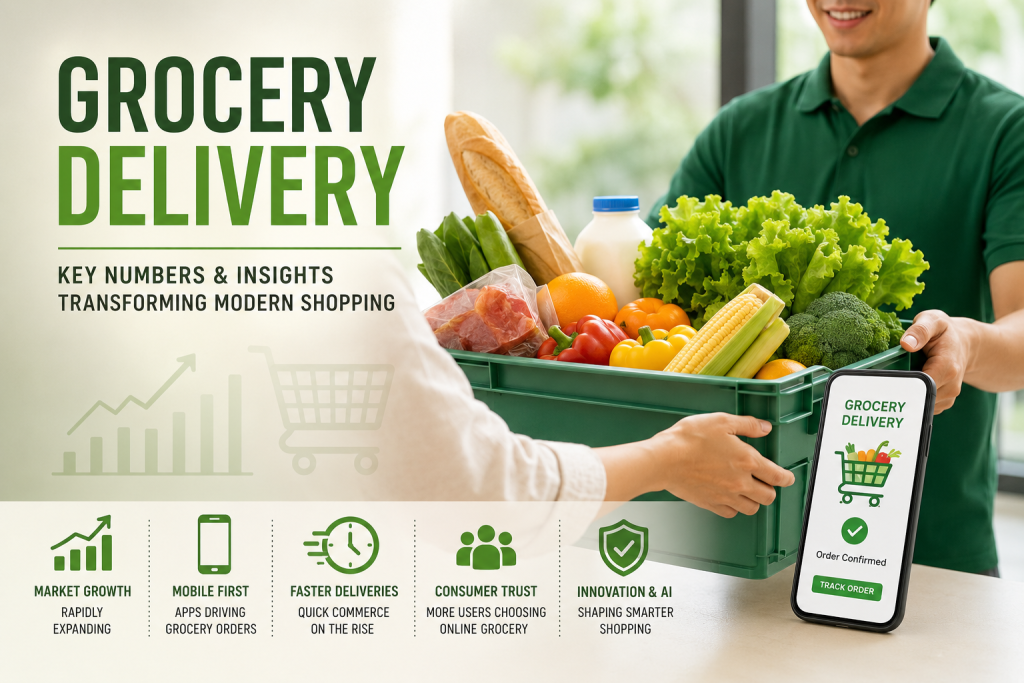

The grocery delivery industry has rapidly evolved from a convenience service into a mainstream shopping solution. Driven by changing consumer lifestyles, smartphone adoption, digital payments, and faster logistics, online grocery shopping has become an essential part of the retail ecosystem.
As consumers increasingly prioritize convenience and time savings, grocery delivery services continue to expand worldwide. Understanding the latest trends and statistics provides valuable insight into how the industry is reshaping consumer behavior and the future of retail.
Online Grocery Shopping Continues to Grow
Millions of consumers now purchase groceries online on a regular basis. What was once considered a niche service has become a preferred shopping method for busy professionals, families, and urban households.
Factors driving this growth include:
- Increasing smartphone usage
- Faster delivery options
- Improved mobile shopping experiences
- Expansion of grocery delivery platforms
- Growing trust in digital payments
The continued digital transformation of retail has made grocery delivery accessible across both developed and emerging markets.
| Grocery Delivery Growth Drivers | Impact on Consumers |
|---|---|
| Smartphone adoption | Easier mobile ordering |
| High-speed internet | Faster browsing and checkout |
| Digital payment systems | Secure cashless transactions |
| Improved logistics | Faster and reliable deliveries |
| Expanding delivery networks | Greater service availability |
Convenience Is the Biggest Purchase Driver
Consumers increasingly value convenience over traditional in-store shopping. Grocery delivery allows shoppers to purchase everyday essentials without traveling, waiting in checkout lines, or carrying heavy bags.
Popular reasons consumers choose grocery delivery include:
- Saving time
- Flexible delivery scheduling
- Easy price comparisons
- Contactless delivery
- Access to exclusive online discounts
- Convenient repeat ordering
As work-from-home and hybrid work models continue, demand for convenient shopping experiences remains strong.
Mobile Apps Dominate Grocery Orders
Smartphones have become the preferred platform for grocery shopping. Retailers and delivery companies continue investing heavily in user-friendly mobile applications that simplify product discovery, payment, and delivery tracking.
Today’s grocery apps commonly offer:
- Personalized product recommendations
- One-click reordering
- Digital coupons
- Real-time order tracking
- Multiple payment options
- AI-powered shopping suggestions
The mobile-first shopping experience has become a key competitive advantage for grocery delivery platforms.
Quick Commerce Is Reshaping Delivery Expectations
Consumers increasingly expect groceries to arrive within minutes rather than hours or days. This has accelerated the rise of quick commerce (Q-commerce), where local fulfillment centers and optimized delivery networks enable ultra-fast deliveries.
Companies are investing in:
- Micro-fulfillment centers
- Dark stores
- AI-powered route optimization
- Local inventory management
- Hyperlocal delivery partners
These innovations are significantly reducing delivery times while improving customer satisfaction.
| Consumer Grocery Delivery Trends | Industry Impact |
| Faster delivery expectations | Investment in quick commerce |
| Mobile ordering growth | Increased app development |
| Personalized shopping | AI-powered recommendations |
| Subscription memberships | Higher customer retention |
| Contactless delivery | Improved customer convenience |
Subscription Services Increase Customer Loyalty
Many grocery delivery platforms now offer subscription-based memberships that provide benefits such as:
- Free deliveries
- Priority delivery slots
- Exclusive discounts
- Cashback rewards
- Member-only offers
These programs encourage repeat purchases while increasing long-term customer retention for retailers.
Artificial Intelligence Is Improving Grocery Shopping
Artificial intelligence is becoming a critical technology across grocery delivery platforms. AI helps retailers optimize inventory, personalize recommendations, forecast demand, and improve delivery efficiency.
Common AI applications include:
- Product recommendations
- Smart shopping lists
- Inventory forecasting
- Demand prediction
- Dynamic pricing
- Automated customer support
As AI capabilities continue to advance, grocery shopping is expected to become increasingly personalized and efficient.
Sustainability Is Becoming a Key Focus
Environmental concerns are influencing how grocery delivery companies operate. Many businesses are adopting sustainable practices to reduce their environmental footprint while meeting growing consumer expectations.
Current sustainability initiatives include:
- Electric delivery vehicles
- Recyclable packaging
- Route optimization to reduce emissions
- Eco-friendly grocery bags
- Reduced food waste through better inventory planning
Consumers increasingly favor retailers that demonstrate strong environmental responsibility.
The Road Ahead
Grocery delivery has become one of the fastest-evolving segments of modern retail. Advances in digital technology, artificial intelligence, quick commerce, and sustainable logistics continue to reshape how consumers purchase everyday essentials.
As internet connectivity, mobile commerce, and digital payment adoption continue to expand, grocery delivery services are expected to become even faster, smarter, and more personalized. The future of grocery shopping will be defined by convenience, innovation, and seamless digital experiences, making online grocery delivery an integral part of everyday life for millions of consumers worldwide.